![logo[2]](https://www.unitedfenceutah.com/wp-content/uploads/2016/02/logo2.png)
What Are the Best Security Fence Options for Schools and Public Buildings?

What Are the Common Misconceptions About Composite Fencing Like Trex — and What’s the Reality?
February 24, 2026
How Security Fencing Can Be Designed to Blend with Aesthetics Without Compromising Safety
March 31, 2026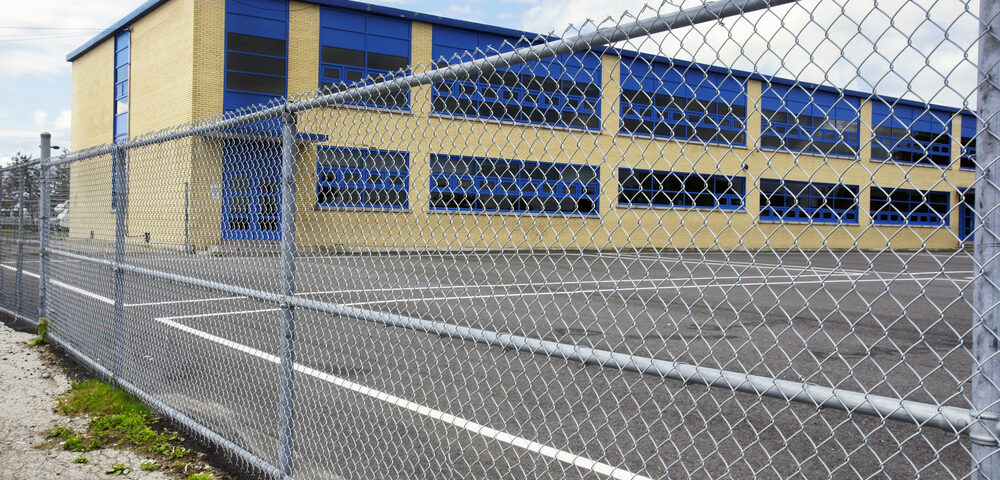
Protecting schools and public facilities has become a top priority for administrators, municipalities, and community leaders. While no single solution can address every security concern, a well-designed perimeter fence plays a critical role in controlling access, improving visibility, and creating a safer environment for students, staff, and visitors.
The best school security fencing balances protection with functionality. It must deter unauthorized access without making the property feel unwelcoming. It should also provide long-term durability, require manageable maintenance, and fit within budget constraints. From elementary schools and high schools to libraries, government offices, and community centers, selecting the right fencing system is an important investment in public safety.
Why Security Fencing Matters for Schools and Public Facilities
Schools and public buildings experience significant daily traffic, making perimeter control essential. Security fencing helps define property boundaries, direct visitors toward designated entrances, and reduce opportunities for unauthorized access.
Beyond physical protection, fencing contributes to overall site management by:
- Controlling entry and exit points
- Protecting students and staff
- Reducing trespassing and vandalism
- Supporting emergency response procedures
- Enhancing security monitoring efforts
Modern fencing systems can also be integrated with surveillance cameras, access control systems, and electronic gate controls to provide an additional layer of protection.
Chain Link Fencing with Privacy Slats
One of the most widely used solutions for school security fencing is chain link fencing with privacy slats. This option combines affordability, durability, and improved visual screening.
Chain link fencing is known for its strength and cost-effectiveness. When privacy slats are added, it helps reduce visibility into sensitive areas while maintaining airflow and structural performance.
Benefits of Chain Link with Privacy Slats
- Budget-friendly installation
- Durable galvanized or vinyl-coated options
- Enhanced privacy around playgrounds and equipment areas
- Low maintenance requirements
- Easy integration with security gates
Many schools use chain link fencing around athletic fields, playgrounds, maintenance facilities, and perimeter boundaries because it provides reliable security at a reasonable cost.
Steel Palisade Fencing
Steel palisade fencing is one of the most secure perimeter solutions available for schools and public facilities. Its robust construction and anti-climb design make it difficult to breach while maintaining clear visibility for security personnel and surveillance systems.
The vertical steel pickets are typically spaced to discourage climbing and can be equipped with pointed or rounded tops depending on the facility’s requirements.
Benefits of Steel Palisade Fencing
- Exceptional strength and durability
- Strong anti-climb characteristics
- Long service life
- Excellent visibility for monitoring
- Effective deterrent against trespassing
Steel palisade fencing is commonly used around government facilities, utility sites, transportation infrastructure, and schools that require elevated security measures.
Ornamental Aluminum Fencing
For schools and public buildings seeking both security and aesthetics, ornamental aluminum fencing is an excellent option. Aluminum fences provide a professional appearance while delivering dependable perimeter protection.
Unlike steel, aluminum naturally resists corrosion, making it particularly attractive for long-term installations where maintenance budgets may be limited.
Benefits of Ornamental Aluminum Fencing
- Attractive appearance
- Rust-resistant construction
- Minimal maintenance requirements
- Long lifespan
- Suitable for schools, parks, and civic buildings
Many educational campuses choose ornamental aluminum fencing because it enhances security without creating an institutional appearance.
Key Safety Features to Consider
Regardless of the fencing material selected, certain safety features significantly improve perimeter security.
Fence Height
Height is one of the most effective deterrents against unauthorized access. Most school and public facility fences range from 6 to 8 feet tall, depending on security requirements and local regulations.
Taller fences create a more secure perimeter while limiting opportunities for climbing.
Anti-Climb Features
Modern security fences often incorporate anti-climb elements such as:
- Narrow picket spacing
- Smooth vertical surfaces
- Angled tops
- Reinforced mesh designs
These features increase the difficulty of scaling the fence and improve overall site security.
Locking Mechanisms
Secure gates are just as important as the fence itself. Schools and public facilities often use:
- Keyed locks
- Electronic access controls
- Card-reader systems
- Automatic gate operators
Proper locking mechanisms help ensure access is limited to authorized individuals.
Maintenance and Long-Term Cost Considerations
When evaluating school security fencing, administrators should consider both installation costs and long-term ownership expenses.
Chain Link Fencing
Chain link remains one of the most cost-effective options. Galvanized and vinyl-coated versions require minimal maintenance and can last for decades.
Steel Palisade Fencing
Steel palisade systems typically involve higher upfront costs but offer exceptional durability and security. Powder-coated finishes help reduce maintenance requirements.
Ornamental Aluminum Fencing
Aluminum generally has one of the lowest maintenance requirements among security fencing materials. Its resistance to rust and corrosion contributes to lower lifetime costs.
Choosing the right fence often means balancing initial budget considerations with expected maintenance and replacement expenses over time.
Real-World Applications for Schools and Public Buildings
Many educational institutions use a combination of fencing solutions to address different areas of their property.
For example:
- Elementary schools may use chain link fencing with privacy slats around playgrounds.
- High schools often install ornamental aluminum fencing at primary entrances to enhance appearance and security.
- Municipal facilities may use steel palisade fencing around restricted-access areas or critical infrastructure.
By selecting fencing based on specific site needs, organizations can maximize both security and budget efficiency.
Integrating Modern Security Technology
Today’s fencing systems often work alongside broader security measures. Facilities frequently combine fencing with:
- Security cameras
- Motion detection systems
- Visitor management software
- Access control systems
- Emergency communication systems
Integrating fencing into a comprehensive security strategy improves situational awareness and strengthens perimeter protection.
For schools and public buildings seeking comprehensive perimeter protection, professional Security Fencing solutions can be customized to meet unique safety and operational requirements.
Partner with United Fence Co. for School Security Solutions
At United Fence Co., we understand the importance of creating secure environments for schools, municipalities, and public facilities. Our team designs and installs fencing systems that balance safety, functionality, appearance, and long-term value.
Whether you’re evaluating chain link fencing, steel palisade systems, or ornamental aluminum options, we can help identify the best solution for your property.
Contact United Fence Co. today to schedule a consultation and learn more about security fencing solutions for schools and public buildings.